I come by my interest in sweets very naturally. My first word was “Coo-kie” (as in Monster) and I wouldn’t be surprised if it turns out to be my last.
It gradually dawned on me that as I avidly sought out new flavors and textures, I was also learning a lot about the people, traditions, and ecosystems that produced them. The cultural role of sweet foods became the primary focus of my work as a research anthropologist specializing in material culture. The eating part I do by instinct, but my questions and conclusions are strongly informed by training I received at Macalester College, Macquarie University, and University College London.
As I've come to appreciate opportunities to share sweets (twice the pleasure for half the calories!) I've also sought out ways of sharing their stories. The following projects are some of the ways in which I do so.
It gradually dawned on me that as I avidly sought out new flavors and textures, I was also learning a lot about the people, traditions, and ecosystems that produced them. The cultural role of sweet foods became the primary focus of my work as a research anthropologist specializing in material culture. The eating part I do by instinct, but my questions and conclusions are strongly informed by training I received at Macalester College, Macquarie University, and University College London.
As I've come to appreciate opportunities to share sweets (twice the pleasure for half the calories!) I've also sought out ways of sharing their stories. The following projects are some of the ways in which I do so.
"Ripe for the Telling: Surprising Stories of Washington Fruit"
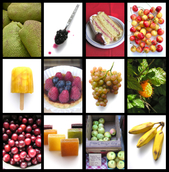
What is the messy and juicy history of Washington’s produce industry? Who was Cashmere’s Cider King? From apples to oranges, huckleberries to durian, these perishable products preserve historic events and reflect our changing relationship to the natural world. This discussion includes a large cast of characters: pioneers, entrepreneurs, orchardists, labor activists, a horticultural prodigy, and Cashmere's larger-than-life "Cider King." Full of suspense, tragedy, triumph, heroism and even some romance, this presentation will reveal some of our state's juiciest stories. Beyond providing nutrition and injecting billions of dollars into Washington state's economy, fruit connects us to the past, to the environment and to people we may never meet.
Thanks to the Humanities Washington Speakers Bureau, I am able to offer this presentation for non-profit organizations throughout Washington state through 2016. This and all Speakers Bureau talks are free and open to the public.
my talk schedule / my profile page / HumWA application guidelines / Speakers roster / HumWA events calendar
Thanks to the Humanities Washington Speakers Bureau, I am able to offer this presentation for non-profit organizations throughout Washington state through 2016. This and all Speakers Bureau talks are free and open to the public.
my talk schedule / my profile page / HumWA application guidelines / Speakers roster / HumWA events calendar
Sweet Travel Blog
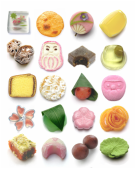
I began my Sweet Travel blog in 2008, when I embarked on an 85-day "sweets safari" in Japan. Since then I've continued to record the results of my day-to-day research and there are now well over 300 entries to sample. Some of my personal favorites include:
- surviving a kappa attack with the help of yaki mochi, a grilled rice dough hot pocket filled with brown sugar and walnut shards
- getting graphic sugar shock from NYC black and white cookies
- sweating over my very own yuzu marmalade
- tasting the sixteenth century in every tiny pastille from Anis de Flavigny
SweetMap
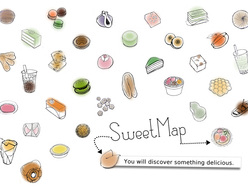
Discover new places by following a trail of crumbs, cakes, and candy!
SweetMap invites visitors to explore Seattle by focusing on sweet treats ranging from mochi and moon cakes to bubble tea and crepes. Users can download or print a free map of sweet-related sites, including churches, schools, landmarks, and retail shops. For most sites, a 5-minute recording of an interview with the business owner or manager introduces the sweets you may encounter and explains how they're made and why they're significant.
This project has received support from:
4Culture / The Simpson Center for the Humanities / Sprout Seattle
SweetMap invites visitors to explore Seattle by focusing on sweet treats ranging from mochi and moon cakes to bubble tea and crepes. Users can download or print a free map of sweet-related sites, including churches, schools, landmarks, and retail shops. For most sites, a 5-minute recording of an interview with the business owner or manager introduces the sweets you may encounter and explains how they're made and why they're significant.
This project has received support from:
4Culture / The Simpson Center for the Humanities / Sprout Seattle
Past Projects
Public Presentation: "A World of Sweets in Washington State"
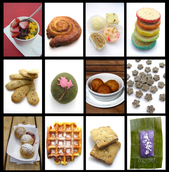
From bienenstich to bánh xu xê, marzipan to mochi, each of the sweets we enjoy across Washington State reveals something of our shared history and culture. These sweet stories of migration and culture change are the subject of my illustrated talk, "A World of Sweets in Washington State."
During this mouth-watering and thought-provoking presentation, I invite audiences to savor the ways in which sweets show how individuals and communities celebrate, adapt, and interact. Served with a side of political, economic, and religious history, this look at our region’s sweetest treats is anything but sugar-coated!
Thanks to the Humanities Washington Speakers Bureau program, I was able to offer this presentation for non-profit organizations throughout Washington state through 2014.
During this mouth-watering and thought-provoking presentation, I invite audiences to savor the ways in which sweets show how individuals and communities celebrate, adapt, and interact. Served with a side of political, economic, and religious history, this look at our region’s sweetest treats is anything but sugar-coated!
Thanks to the Humanities Washington Speakers Bureau program, I was able to offer this presentation for non-profit organizations throughout Washington state through 2014.
Museum Exhibition: SWEET
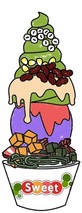
The Wing Luke Museum's KidPLACE Gallery, July 20, 2013 - January 5, 2014
Catering to visitors of all ages, this exhibit explored many favorite sweets from Asia and the Pacific.
The displays included:
-Ingredients pantry and sensory samples
-Sweet-related special events calendar
-Tools and techniques to try
-Interviews with sweets entrepreneurs
-Visitors' own artwork
Catering to visitors of all ages, this exhibit explored many favorite sweets from Asia and the Pacific.
The displays included:
-Ingredients pantry and sensory samples
-Sweet-related special events calendar
-Tools and techniques to try
-Interviews with sweets entrepreneurs
-Visitors' own artwork
Gallery Shows
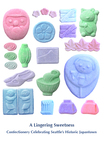
A Lingering Sweetness: Confectionery Commemorating Seattle's Historic Japantown
KOBO at Higo, Seattle WA August 2006 |
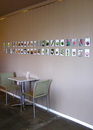
Sweet Travel Fresh Flours, Seattle WA 2010 |
Other
Presentations:
Publications:
Press:
- Juicy Fruit Stories, breakfast lecture for Washington State Hospital Association retreat, Skamania WA, July 2014
- Meet the Sweet: Mochi, display and hands-on activity for all-ages Play Day at Maxime Bilet's Art for Food, Seattle WA, May 2014
- The Grand Tea Party, display, sampling, and interpretation for event at Maxime Bilet's Art for Food, Seattle WA, May 2014
- Edible Insights: What Sweets are Saying, guided dessert course for Washington State Hospital Association dinner, Kirkland WA, March 2014
- Meet the Sweet: Yatsuhashi, display, sampling, and interpretation for Holiday Event at Maxime Bilet's Art for Food, Seattle WA, January 2014
- Food for Thought: GMOs, Home-Cooked Meals, and the American Relationship to Food, Humanities Washington "Think and Drink" panel discussion, Gilbert Cellars, November 2013
- Sweet Celebrations: Diwali and Mithai, illustrated lecture and tasting for Donor Appreciation Event, Wing Luke Museum, Seattle WA, October 2013
- Food for Thought: GMOs, Home-Cooked Meals, and the American Relationship to Food, Humanities Washington "Think and Drink" panel discussion, Naked City Brewery, October 2013
- Julia Harrison Sees The World Through Her Sweet Tooth, radio interview, The Conversation with Ross Reynolds, KUOW Public Radio 94.9, Seattle WA, November 2012
- Modernizing Mochi: From Divine Mirror to Frozen Treat, illustrated lecture, Seattle Asian Art Museum, February 2012
- A Sugar-coated History? Japanese Seattle as Seen Through SweetMap, illustrated lecture, KOBO at Higo, Seattle WA, March 2012
Publications:
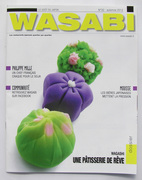
- Cover image, Wasabi Magazine, Paris FR, Autumn 2012
- Article,"The Japanese Snickerdoodle," Edible Seattle Magazine, January 2010
Press:
- "Sweet talker maps trade routes, trends," by Andrea Brown, Everett Herald, June 4, 2013
- "Cultural anthropologist tells Japantown's bittersweet history through candy," by Floragela Davila, Seattle Times, October 6, 2006